Tip of the Week: eVouchers help circumvent health plan sponsor benefit designs to get high-cost brand drugs dispensed

Brand drugmakers are circumventing pharmacy benefit plan designs by offering eVouchers or electronic vouchers for expensive drugs at the “Switch.” Why aren’t more people outraged about this? The switch is what routes the third-party prescription claims to the PBM or health plan associated with the prescription. Within seconds, the script leaves the pharmacy, goes to the switch, and then is received at the relevant PBM.

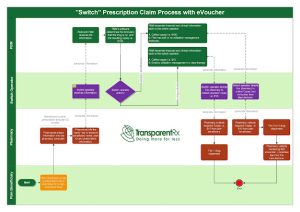
When the benefit design has soft UM or no utilization management protocols, such as mandatory generic enforcement, it allows drugmakers to bypass a tier 1 drug for a tier 2-4 drug or even worse a non-formulary drug, with eVouchers (see process flow diagram below). The two largest switch companies are RelayHealth and Change HealthcareAs Relay Health tells the story, its electronic voucher program is a Win-Win-Win solution:
  • Doctors “set aside concerns over costs”
  • “Patients benefit from lower copays” and “increased adherence”
  • Manufacturers benefit from increased “scripts written”, “the likelihood patients will fill and adhere to them” and “increased brand loyalty”
But what about you, the health plan sponsor? You are conveniently left out of the equation even though you cover most of the cost. I teach in our CPBS Certification course how plan sponsors fund the entire USA prescription drug system but know the least about how it works. Simply put, it is your checkbook they are after. The budgetary impact of switch operators’ eVoucher programs to health plan sponsors is significant and growing with each passing day.

Click to Enlarge

There are two ways to prevent the scenario above from happening:

(1) PBM inserts language into its contract with the Switch company, preventing the action.
(2) Benefit design maximizes the drug utilization management toolkit including step therapy and mandatory generic enforcement programs.

Number two is sticky as many plan sponsors are hellbent on employees getting the drug they want without any scrutiny (i.e. step therapy). I don’t agree but it’s not my checkbook. The point is to make people happy through better outcomes not for the sake of avoiding the pain that comes with running an efficient health plan. In a sense, drugmakers, and non-fiduciary PBMs for that matter, are leveraging HR’s desire to keep employees “happy.”

For TransparentRx the choice is simple, either you want an efficient pharmacy benefit program or you don’t. If you [health plan sponsors] don’t want an efficient pharmacy benefit program then expect to pay $1000 for a drug when a $100 drug would have provided the same level of efficacy, for example. eVouchers, especially when supported with direct-to-consumer TV ads for high-cost brand drugs and soft utilization management protocols, are an expensive proposition for health plan sponsors yet lucrative one for brand drugmakers.

Tuesday Tip of the Week: 3 Ways Savings Could be Achieved by Improving Pharmacy Benefit Design and Management (Rerun)

PBMs or pharmacy benefit managers have large scale, highly automated operations to process claims and provide customer (client and member) service. The services a PBM provides can be categorized as administrative or clinical. Administrative services include benefit administration, enrollment and eligibility administration, pharmacy network administration, mail pharmacy service, claims adjudication, and manufacturer contracting and rebate administration. Clinical services range from formulary management to sophisticated utilization and disease management programs.

PBM services revolve around the drug benefit designed by the client. The benefit design determines the drugs that are covered, and the extent to which generics and formulary drugs are mandated. As a part of the drug benefit, a co-pay structure is developed which determines the cost sharing between the client and its employees or members. PBMs receive enrollment information from their clients and maintain the pharmacy benefit eligibility files. 
Plan sponsors could lower drug spending and out-of-pocket costs for enrollees by reducing the use of high-cost, low-value drugs on formularies. PBMs provide a range of services including formulary development, clinical care management, utilization management (including preauthorization), negotiations with pharmacies for drug price discounts, negotiations with manufacturers for rebates, and claims adjudication and payment. 

Plan sponsors use services depending on their individual models and preferences; administrative fees are assessed accordingly. Services with the potential to increase revenue streams to the PBM may lower administrative fees; for example, formulary design that allows PBMs to select “profitable” drugs in terms of rebates and pharmacy spread might be accompanied by reduced administrative fees. Plan sponsors have made unfavorable and often uninformed trade-offs for reduced administrative fees to PBMs. Here are three ways savings could be achieved by improving pharmacy benefit design and management. 
1) Eliminate wasteful or low-value drugs which includes me-too drugs (immaterial tweaking of a particular ingredient results in a “new” drug that adds no clinical value and often extends patent protection), combination drugs or drugs that combine two active ingredients into one pill resulting in costs substantially higher than the costs of the individual ingredients, prescription drugs offered when over-the-counter alternatives are available, and brand-name or higher-priced generic drugs offered when lesser-cost generics are available
2) Compare reduced per-member per-month drug spend that can result from an appropriate drug mix instead of the current conventional procurement processes involving consultants comparing administrative fees, rebates, and discounts.
3) Make the PBM’s management fee the #1 metric when evaluating PBM proposals and performance. The revenue a PBM keeps for itself is referred to as its management fee. In other words, it is the fee a PBM charges a client for the services it was hired to perform. PBM management fees are a hidden driver of pharmacy costs. While discount guarantees, rebates and clinical management are very important, they are also being used to distract purchasers from a key driver of their final plan costs – PBM management fees.

Tuesday Tip of the Week: Expanded Drug Lists are an Excessive Pharmacy Cost Driver

There is disagreement around the watercooler whether or not the prescription drugs presented on a PBM’s expanded drug list are required by law. Here is a link to the IRS notice which explains that HDHP expanded list of drugs are permissible and not required. Furthermore, if a pharmacy benefit manager offers a separate expanded drug list or EDL they are usually very careful to use phrases such as ‘may be covered’ or ‘if your plan covers.’ This a clear signal that coverage for these prescription drugs is optional and that the plan design ultimately determines if a patient gets access to these drugs. 
It’s also important to note that the IRS notice specifies only the therapeutic categories (e.g. diabetes) which are treated as preventive care. The PBMs themselves are then left to decide which drugs to sell, within these categories, to their clients as part of an EDL. PBMs who profit from poor product mix or overutilization have done a masterful job making the EDL look like something that is going to add incremental value to its groups and help patients.
Consumer Reports wrote, “If you’re like most Americans, you probably start your day with a hot shower, a cup of coffee—and a handful of pills.” Plan sponsors who design benefits that require neither a copayment nor a deductible for drugs listed on an EDL are subsidizing a crisis similar to the opioid epidemic. When drugs are free to members a role reversal occurs, for instance. Instead of the physician diagnosing then prescribing a medication based upon that diagnosis, members self-diagnose then go into the PCPs office and ask for a medication they know is free to them. Many times patients will leave with the medication they came for.
Click to Learn More

Things can get much worse from there. Almost 1.3 million people went to U.S. emergency rooms due to adverse drug effects in 2014, and about 124,000 died from those events. That’s according to estimates based on data from the Centers for Disease Control and Prevention and the Food and Drug Administration. Today, those numbers are likely far higher. Other research suggests that up to half of those events were preventable. The amount of harm stemming from inappropriate prescription medication is staggering. 
All of that bad medicine is costly, too. An estimated $200 billion per year is spent in the U.S. on the unnecessary and improper use of medication, for the drugs themselves and related medical costs, according to the market research firm IMS Institute for Healthcare Informatics. In short, plan sponsors will do more harm than good when you create an environment where the relationship between physician and patient becomes transactional.
It is TransparentRx’s position that the formulary should not be circumvented to accommodate EDL drugs. Simply put, there should not be a separate drug list. Fraud, waste and abuse (FWA) of prescription drugs aside, what about rebates? If your contract calls for full pass-through of formulary rebates, are you paid rebates on a drug listed on the EDL? The PBM is keeping a larger share of those rebate dollars just as sure as the sun will rise every morning in the East. 
Worse yet, many of the drugs on an EDL are brand drugs and even very high cost specialty drugs. TransparentRx’s formulary is designed to provide our clients with a choice of pharmacy products that meet all of the essential clinical conditions while addressing economic needs, and providing quality of care, affordability and choice. Circumvention of our formulary or any really good formulary is likely to result in wasteful and/or duplicative spending. 
If a drug is approved by the P&T committee to be placed on the formulary and also happens to be on the EDL, the benefit is fully applied. Moreover, when the deductible is waived for prescription drugs on the EDL and this same drug is also on the ACA drug list the member pays zero out of pocket. This is a loophole. I get that adherence goes up when member cost share goes down. This is especially true when there is zero OOP (out-of-pocket) costs for members. But, there is a downside when member cost share is too low and that is more fraud, waste and abuse. 
A PBM’s primary responsibility is to help our clients contain prescription drug costs. A close second and third responsibilities are to help members get better and to protect them. Your members are over the moon when they get “free” prescription drugs heck who wouldn’t be. Yet, there is a dark side. Don’t circumvent your formulary with a separate, expanded drug list it will save your company money and possibly a life.

Tuesday Tip of the Week: 3 Ways Savings Could be Achieved by Improving Pharmacy Benefit Design and Management

PBMs or pharmacy benefit managers have large scale, highly automated operations to process claims and provide customer (client and member) service. The services a PBM provides can be categorized as administrative or clinical. Administrative services include benefit administration, enrollment and eligibility administration, pharmacy network administration, mail pharmacy service, claims adjudication, and manufacturer contracting and rebate administration. Clinical services range from formulary management to sophisticated utilization and disease management programs.
PBM services revolve around the drug benefit designed by the client. The benefit design determines the drugs that are covered, and the extent to which generics and formulary drugs are mandated. As a part of the drug benefit, a co-pay structure is developed which determines the cost sharing between the client and its employees or members. PBMs receive enrollment information from their clients and maintain the pharmacy benefit eligibility files.
Plan sponsors could lower drug spending and out-of-pocket costs for enrollees by reducing the use of high-cost, low-value drugs on formularies. PBMs provide a range of services including formulary development, clinical care management, utilization management (including preauthorization), negotiations with pharmacies for drug price discounts, negotiations with manufacturers for rebates, and claims adjudication and payment.
Plan sponsors use services depending on their individual models and preferences; administrative fees are assessed accordingly. Services with the potential to increase revenue streams to the PBM may lower administrative fees; for example, formulary design that allows PBMs to select “profitable” drugs in terms of rebates and pharmacy spread might be accompanied by reduced administrative fees. Plan sponsors have made unfavorable and often uninformed trade-offs for reduced administrative fees to PBMs. Here are three ways savings could be achieved by improving pharmacy benefit design and management.
1) Eliminate wasteful or low-value drugs which includes me-too drugs (immaterial tweaking of a particular ingredient results in a “new” drug that adds no clinical value and often extends patent protection), combination drugs or drugs that combine two active ingredients into one pill resulting in costs substantially higher than the costs of the individual ingredients, prescription drugs offered when over-the-counter alternatives are available, and brand-name or higher-priced generic drugs offered when lesser-cost generics are available
2) Compare reduced per-member per-month drug spend that can result from an appropriate drug mix instead of the current conventional procurement processes involving consultants comparing administrative fees, rebates, and discounts.
3) Make the PBM’s management fee the #1 metric when evaluating PBM proposals and performance. The revenue a PBM keeps for itself is referred to as its management fee. In other words, it is the fee a PBM charges a client for the services it was hired to perform. PBM management fees are a hidden driver of pharmacy costs. While discount guarantees, rebates and clinical management are very important, they are also being used to distract purchasers from a key driver of their final plan costs – PBM management fees.

Tuesday Tip of the Week: Increase out-of-pocket (OOP) spending for specialty drugs

Medicare beneficiaries pay substantially higher out-of-pocket (OOP) costs for specialty drugs than employer-sponsored insurance enrollees. Based on specialty drug class, average OOP spending for Medicare fee-for-service (FFS) enrollees was $108 to $1437 greater than spending by employer-sponsored insurance enrollees. Medicare Advantage beneficiaries had slightly higher OOP spending than FFS beneficiaries.
The pharmaceutical pipeline is moving toward more high-cost specialty drugs. From 2008 until 2017, CMS defined specialty drugs as those with a monthly cost greater than $600; beginning in 2017, the threshold became $670. These drugs are primarily biologics and biosimilars used to treat complex chronic conditions such as rheumatoid arthritis (RA), multiple sclerosis (MS), cancer, and hepatitis C. Patients with these conditions have few other clinical options, forcing them to pay high cost-sharing rates or forgo treatment.
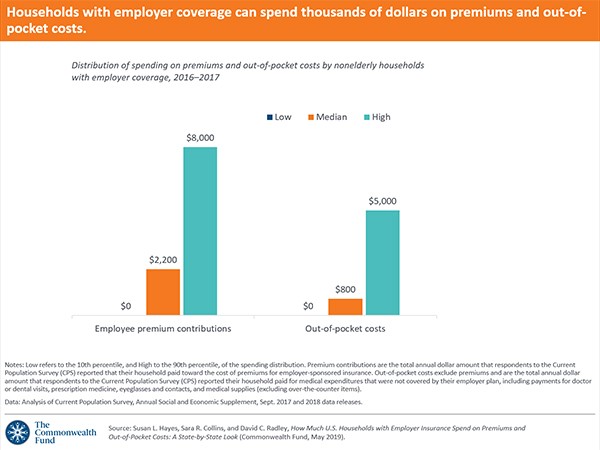
How Much US Households with Employer Insurance Spend Premiums OOP |  Commonwealth Fund
Care for these diseases can begin around age 40 years and continue throughout life, making health insurance coverage likely to span across employer-sponsored insurance (ESI) and Medicare prescription drug (Part D) coverage. Few studies have examined whether the financial burden placed on patients who take specialty drugs differs among those with ESI, Medicare fee-for-service (FFS), and Medicare managed care (Medicare Advantage [MA]) drug coverage.
The benefit structure of Part D results in Medicare enrollees paying substantially higher OOP costs for specialty drugs than employer-sponsored insurance enrollees, primarily due to the absence of an OOP cap in Medicare and the donut hole. Given the policy and clinical concerns that high cost sharing may lead to nonadherence and financial burden, it is important to understand the levels of cost sharing across insurance types and the role that benefit design may play.

Tuesday Tip of the Week: Out-of-pocket caps don’t lead to increased health plan spending or reduced affordability for all enrollees

A study published in the New England Journal of Medicine of caps placed on out-of-pocket (OOP) costs for specialty drugs demonstrated that the caps did not lead to an increase in health care spending except for patients at the highest tier (95th percentile) of spending, investigators wrote. They concluded that this showed that the caps were doing what they were supposed to do: protect the patients most vulnerable to high OOP costs without leading to across-the-board health care spending increases.
The study included records for 27,161 patients, from 2011 to 2016, covered by 3 national payers. Among patients in the 95th percentile of spending on specialty drugs, OOP costs were $351 lower per user per month, which represented a decrease of 32% in spending, investigators said.

Investigators noted that not enough is known about the effects of caps on patient costs, and they sought to remedy this deficit via their study. They noted that specialty drugs such as antiviral agents for hepatitis C and biologic agents for multiple sclerosis or rheumatoid arthritis are highly effective but spending for these agents is disproportionate to that for other drugs.

By the Numbers

“Over the past decade, health-plan spending for such treatments increased from an estimated 26% of total drug spending to 49%, while the treatments remained below 2.5% of total prescriptions dispensed,” they wrote.

Meanwhile, the use of high cost-sharing drug tiers among employer sponsored health plans has risen from 11% to 51%, with a simultaneous increase in the disparity in OOP spending between specialty drug users and nonspecialtiy drug users, “becoming 3 times as large as that in an earlier 10-year period,” the authors wrote.

In just the past 2 years, at least 21 states and the federal government have introduced legislation to control OOP patient costs for prescription drugs, and 11 states have introduced laws targeting specialty drug spending. Of the latter group, Delaware, Louisiana, and Maryland passed legislation and imposed caps on OOP for commercial health plans at $150 per 30-day supply of specialty medication, the authors wrote.

Investigators said their concern was that they would find that caps would lead to increased health plan spending followed by increases in insurance premiums and reduced insurance affordability for all enrollees. This did not happen.

Tuesday Tip of the Week: Factor Benefit Design into your PBM Scorecard

Factor in the actual benefit design, not questions about benefit design, into your PBM scorecard. At a minimum, it should be the same form the PBM uses to set your group up in the back-office. Sometimes even the PBM’s benefit design form excludes important details, such as DAW codes, so be careful. If important information is missing get it included especially when that information contributes to your cost. 
Click to Learn More
 
Never once during hundreds of RFPs has any consultant or broker ever asked us for a signature ready benefit design as part of our response. I’ve not taken a poll so I don’t know the reason. Maybe it is because some believe benefit design doesn’t have a big role in determining cost. If that is the case, nothing could be further from the truth. I would be asking for a benefit design to be submitted as if we were going live with it.
 
Don’t put 50 questions in a RFP around benefit design where important details get lost in translation. Instead, get a copy of a signature ready benefit design and score it as part of the PBMs proposal. Here are some weights I recommend applying to each scorecard:
 
Contract – 40%
 
Benefit Design – 25%
 
References – 10%
 
Questionnaire – 5%
 
Reverse Auction – 15% 
 
Finalist Presentation – 5%
 
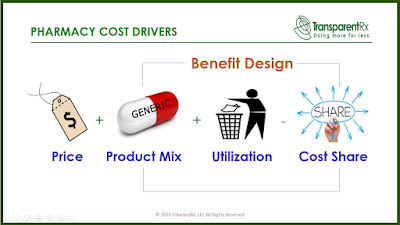
In pharmacy cost drivers, price is 1A and benefit design is 1B. Aside from copayments and deductibles (cost sharing) most plan sponsors know little else about their benefit design and have left it up to the PBM to decide. When the PBM is non-fiduciary that could lead to significant overpayments.